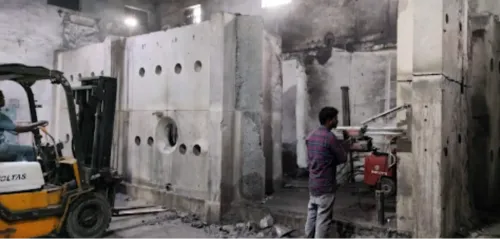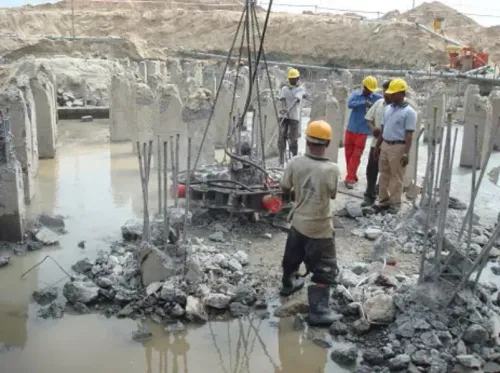

RCC beams carry loads from slabs and transfer them to columns, walls or foundations. Any attempt to cut, trim or remove a beam can alter the building’s load path. Beam diamond saw cutting must therefore be treated as a structural operation, not ordinary concrete breaking.
Salasar Demolitions Pvt Ltd carries out controlled RCC cutting based on the approved work scope, access limitations and removal requirements. Before cutting a structural beam, the responsible engineer should confirm whether it can be altered and specify any temporary support or permanent strengthening needed.
Why Would an RCC Beam Need Cutting?
Beam cutting may be required during redevelopment, industrial modification or correction of existing construction. Common situations include:
- Complete removal of an approved beam
- Trimming a non-critical projecting section
- Creating space for new structural work
- Removing damaged concrete for rehabilitation
- Separating beams during controlled demolition
- Modifying industrial platforms
- Reconfiguring an approved building layout
Cutting should not proceed solely because a beam obstructs a proposed opening. Its structural role must be established first.
Why Diamond Saw Cutting Is Often Preferred
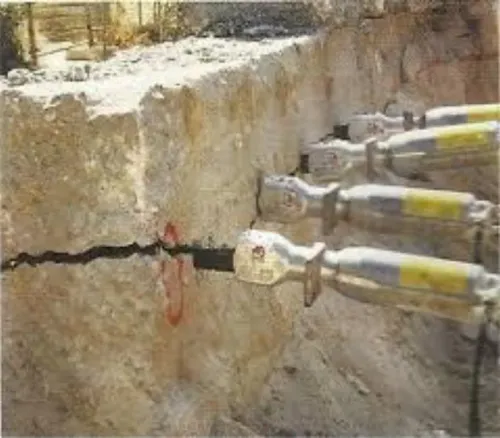
Conventional breakers apply repeated impact and can produce cracks beyond the intended removal area. Diamond saws separate concrete along defined lines with considerably lower vibration.
The method offers:
- Controlled cutting through concrete and steel
- Cleaner edges for subsequent construction
- Reduced vibration around retained elements
- Better control of the removal boundary
- Less uncontrolled concrete fragmentation
- Greater suitability near sensitive structures
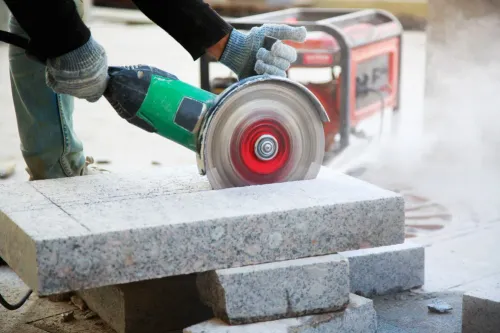
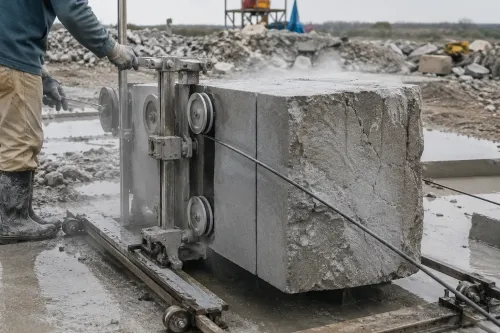
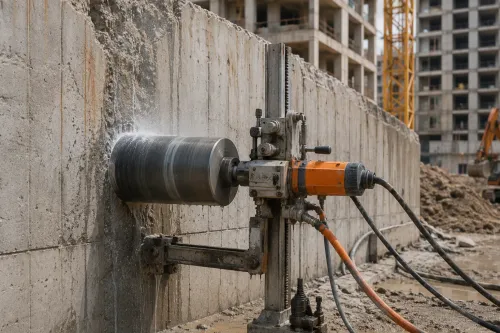
Depending on beam dimensions and access, the work may use a wall saw, hand-held saw, ring saw or diamond wire saw.
Key Risks in Beam Cutting
The greatest risk is a sudden change in structural stability. If a load-bearing beam is cut before loads are transferred, the connected slab or wall may move, crack or collapse.
The concrete section itself is also a handling hazard. Even a short RCC beam segment can weigh hundreds of kilograms. Once reinforcement is fully severed, the piece must already be supported by an approved lifting or restraint system.
Additional risks include:
- Blade contact with unexpected embedded items
- Water and slurry reaching electrical systems
- Falling concrete fragments
- Equipment instability
- Work at height
- Overcutting into retained columns or slabs
- Damage caused by an incorrect cutting sequence
Safe Beam Cutting Practices in Nagpur
Many renovation sites in Nagpur have restricted access and occupied areas close to the work zone. Industrial properties may also have machinery, pipelines or production activity below the beam.
Before work begins, the area should be inspected from all accessible sides. Temporary props, structural staging or lifting equipment must be installed according to the planned load transfer.
A typical sequence may include:
- Reviewing the structural engineer’s instructions
- Isolating the work area above and below
- Installing temporary supports
- Marking the approved cutting boundaries
- Providing lifting or restraint points
- Making controlled cuts in the specified order
- Lowering each separated section safely
- Inspecting the retained concrete and reinforcement
Questions to Resolve Before Approving the Work
Property owners and project managers should confirm who has approved the structural modification, how loads will be supported and what size each removed section will be. They should also ask how cutting slurry, debris and equipment access will be managed.
If strengthening is required, its relationship with the cutting sequence should be clearly documented. In some cases, steel supports, jacketing or other reinforcement must be installed before the existing beam is altered.
Beam diamond saw cutting provides accuracy, but the saw itself does not make a structural modification safe. Engineering assessment, load support and controlled removal are equally important. Arrange a technical inspection before finalising any RCC beam-cutting work.
Keywords