Chemical anchor bolt grouting is used to fix threaded rods, rebars and fastening elements into concrete or masonry. Instead of relying only on mechanical expansion, the system uses a resin-based compound to bond the anchor to the drilled substrate.
The technique supports structural retrofitting, machinery installation, steel fabrication and building extensions. Its performance, however, depends heavily on correct hole preparation, product selection and installation control. Salasar Demolitions Pvt Ltd carries out chemical anchoring after assessing the base material, load requirement and actual site conditions.
Where Are Chemical Anchors Used?
Chemical anchor systems have numerous construction and industrial applications, including:
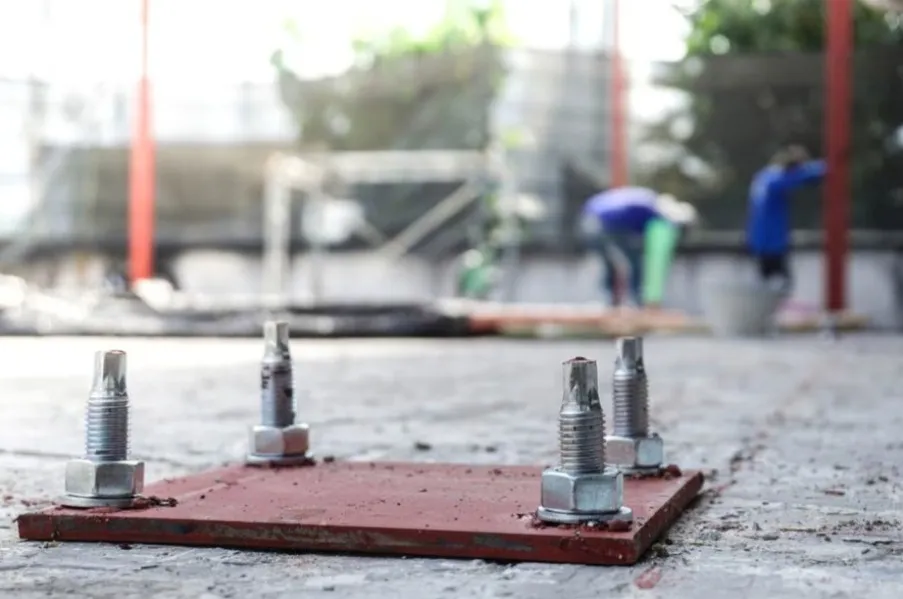
- Fixing steel columns and base plates
- Installing machinery and equipment
- Connecting new RCC work to existing concrete
- Anchoring structural steel supports
- Installing handrails and safety barriers
- Fixing façade and canopy systems
- Retrofitting reinforcement bars
- Strengthening slabs, beams and columns
- Installing heavy-duty racks
- Securing brackets and service equipment
They are useful near concrete edges because they do not create the same expansion forces as many mechanical anchors. The suitability still needs to be verified against the design load and edge distance.
What Determines Anchor Performance?
The resin alone does not guarantee a reliable connection. Several factors influence the final capacity:
- Strength and condition of the concrete
- Hole diameter and embedment depth
- Anchor rod grade and diameter
- Distance from edges and adjacent anchors
- Hole-cleaning procedure
- Resin type and expiry status
- Installation temperature
- Required curing time
- Direction and type of applied load
A system suitable for a light fixture may not be appropriate for structural steel or vibrating industrial equipment.
Why Hole Cleaning Is Critical
Drilling leaves concrete dust inside the hole. If the dust is not removed properly, the resin may bond to loose particles instead of the sound concrete surface.
The specified cleaning sequence may involve blowing, brushing and blowing again with suitable equipment. The installer must use a brush matched to the hole diameter and ensure dust is removed from the full embedment depth.
After cleaning, the chemical compound is injected from the rear of the hole to reduce air pockets. The anchor is then inserted with a slow twisting motion and left undisturbed until the curing period is complete.
Choosing a Chemical Anchoring Contractor in Nagpur
Projects in Nagpur may expose anchor installations to high temperatures, construction dust and varying site conditions. Contractors must account for these factors when selecting resin and estimating curing time.
Before awarding the work, ask the provider for:
- A clear understanding of the design load
- The proposed anchor system and rod specification
- The planned embedment depth
- The drilling and cleaning procedure
- Product storage and expiry checks
- The temperature-based curing schedule
- Testing or pull-out test arrangements where required
The installer should not substitute a different resin or anchor rod without approval from the responsible engineer.
Signs the Site Is Ready
Concrete should have adequate strength and be free from loose, cracked or severely deteriorated material at the anchor location. The drilling points should be checked for reinforcement and hidden services. Access must also be available to keep anchors undisturbed while the resin cures.
Accurate chemical anchor bolt grouting creates a strong and dependable connection, but installation shortcuts can significantly reduce its performance. Share the drawings, anchor schedule and load requirements when requesting a project assessment.
Keywords