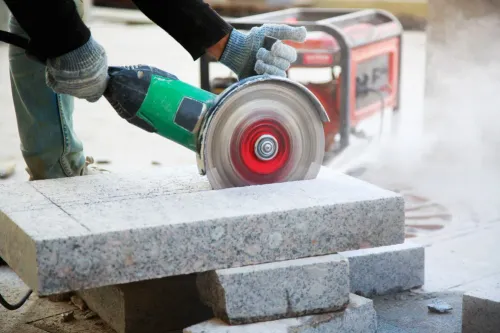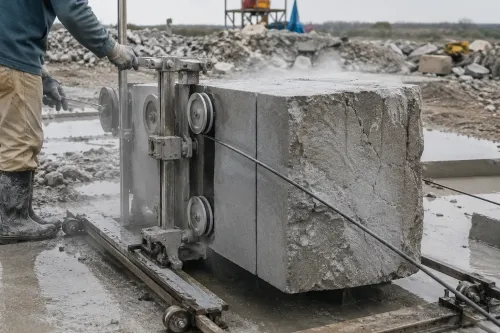
Hard rock can delay foundation excavation, basement construction, roadwork and utility installation. Conventional breakers may take considerable time, while blasting is often unsuitable near buildings, roads, pipelines or occupied premises. Hydraulic rock splitting offers a controlled alternative for breaking rock without explosives.
Salasar Demolitions Pvt Ltd uses hydraulic splitting for projects where restricted access, vibration sensitivity or nearby structures make conventional excavation difficult. The method is also useful for reducing massive concrete sections during demolition and foundation modification.
How Hydraulic Rock Splitting Works
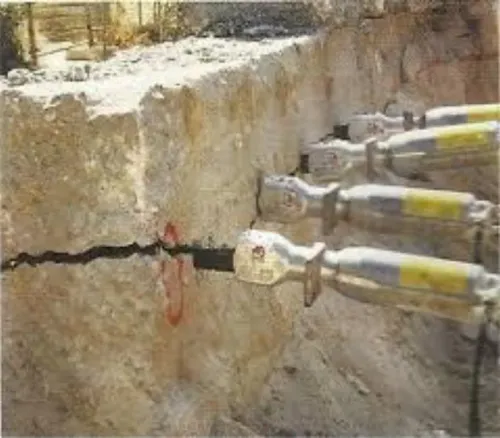
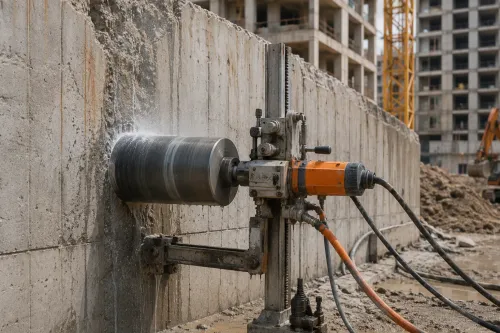
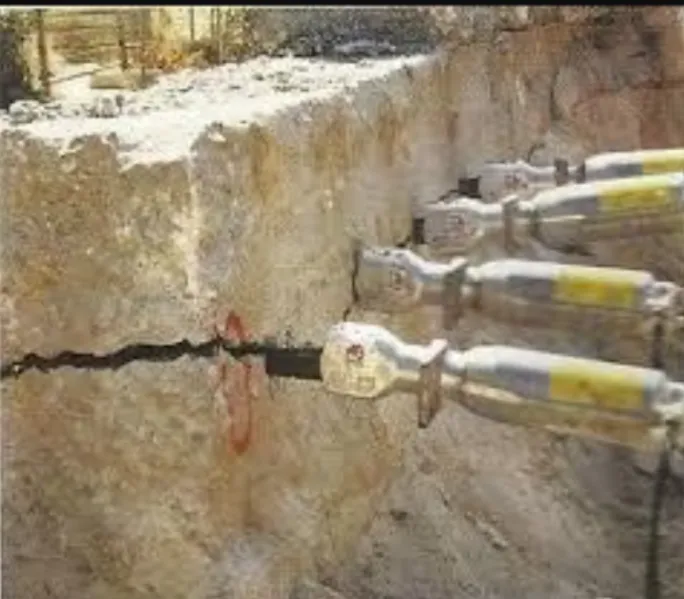
The process begins by drilling holes of a specified diameter and depth into the rock or concrete. A hydraulic splitter is inserted into each hole. When pressure is applied, the splitter forces the material apart along a controlled fracture line.
The broken pieces are then removed mechanically or reduced further until they are manageable. Hole spacing, drilling direction and the natural characteristics of the rock determine how effectively the material splits.
When Is Hydraulic Splitting a Suitable Choice?
Hydraulic splitting can be considered for:
- Foundation and footing excavation
- Basement construction
- Rock removal near existing buildings
- Utility trench development
- Road widening in restricted areas
- Removal of boulders from construction sites
- Industrial plant modification
- RCC foundation reduction
- Bridge and infrastructure repair
- Excavation near underground services
It is particularly useful when blasting permissions, safety distances or site conditions make explosive methods impractical.
Benefits for Congested Sites
Hydraulic rock splitting creates controlled pressure inside the material instead of relying on explosive force. This gives it several advantages:
- Low vibration compared with blasting and heavy impact breaking
- No fly rock caused by explosives
- Better control over the area being removed
- Suitability for confined working spaces
- Reduced disturbance near occupied properties
- No requirement to store or handle explosive material
- Ability to work close to sensitive utilities and machinery
The method is not completely silent, as drilling and debris handling still generate noise. However, the splitting operation itself is controlled and produces less disturbance than many high-impact alternatives.
Evaluating a Provider in Nagpur
Rock conditions vary across construction sites in Nagpur and nearby areas of Maharashtra. Before appointing a provider, request an inspection of the excavation area. A capable contractor should examine rock hardness, visible fractures, access, required excavation depth and nearby structural risks.
Ask the provider to explain:
- The proposed drilling pattern
- The type and capacity of splitting equipment
- How broken rock will be removed
- Whether excavators can access the location
- How surrounding structures will be protected
- The expected sequence and working area
- Measures for dust, noise and debris control
A quotation based only on the approximate surface area may not reflect the actual work. Rock depth, hardness and removal access strongly influence equipment requirements and completion time.
Site Readiness Before Work Begins
The excavation boundary should be clearly marked, and underground utilities must be identified. Space is required for drilling equipment, hydraulic units and broken-rock movement. If the site has narrow access, the contractor should confirm which compact machines can be used.
Owners should also decide where the removed material will be stored or transported. Splitting the rock is only one part of the operation; inefficient debris handling can slow down the entire project.
Hydraulic splitting is most effective when drilling, fracture planning and material removal are treated as one coordinated activity. For a dependable estimate, arrange a site assessment with drawings, excavation levels and access details available for review.
Keywords