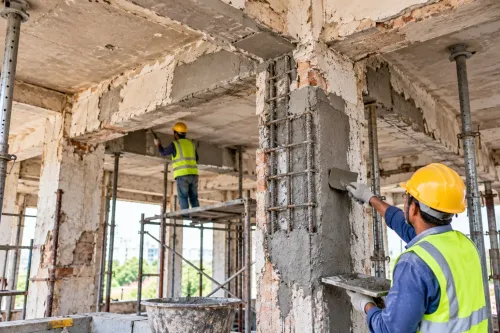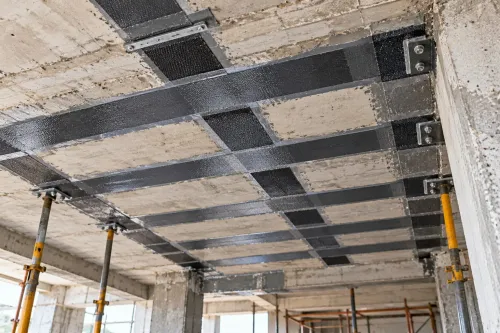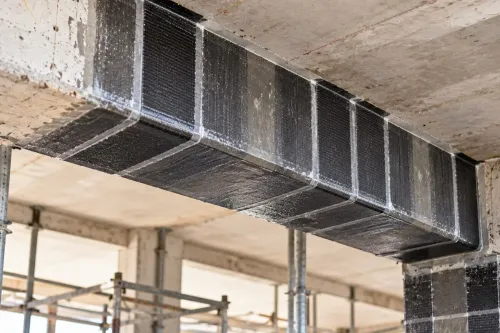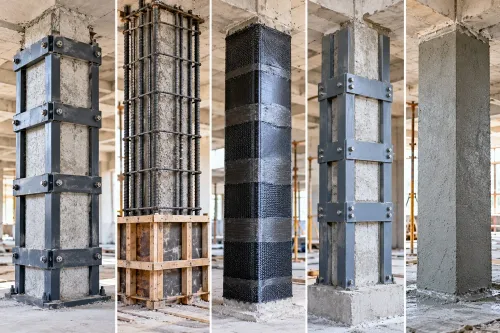

The correct method depends on more than the material being cut. Match the opening or removal task to the member’s thickness, reinforcement, required geometry, access, dust and water controls, and the consequences of disturbing the structure; by the end, you will have a practical basis for choosing between sawing, coring, wire cutting, hydrodemolition and controlled breaking.
Key takeaways
- Use a straight saw for long, accurate slab cuts and expansion joints.
- Choose core drilling for isolated service penetrations through concrete.
- Use wire cutting for thick or irregular members requiring full-depth openings.
- Inspect reinforcement, services and structural loads before approving any cut.
Start with the cut you need, not the equipment you have
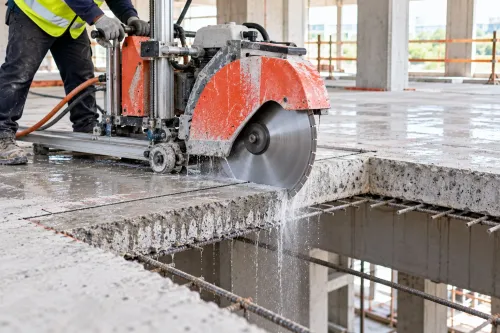
Match the concrete cutting method to the required boundary, depth and opening size before choosing equipment. A straight saw cut suits a long, accurate slot or expansion joint in a slab; a circular core hole suits an isolated service penetration; a wire cut suits a full-depth opening through a thick or irregular member.
| Method | Best fit | Practical constraint |
|---|---|---|
| Floor or road sawing | Long, shallow straight cuts in slabs and pavements | Blade diameter limits depth; joint timing must follow the design, specification and trial observations |
| Wall sawing | Accurate straight openings where a track can be fixed | One-face depth and corner access are limited; two-face cutting can create alignment and breakout problems |
| Core drilling | Round service penetrations and anchor holes | It produces circular holes, not rectangular openings, and requires rig clearance |
| Wire sawing | Full-depth cuts in thick members or irregular geometry | Pulley anchoring, slurry containment and a lifting or lowering plan are essential |
| Handheld sawing or breaker work | Small cuts or rough removal in restricted spaces | Boundary control is weaker, and breakers add vibration and potential surrounding damage |
Tool labels do not settle site controls. Under OSHA Table 1, a handheld power saw with a blade up to 12 inches generally needs integrated water delivery for concrete or masonry; larger saws and drills have different water, dust-collection and respiratory-protection combinations.
Treat a load-bearing or prestressed section differently. Confirm tendon records and the release procedure before cutting; a negative scan alone is not permission. Plan temporary support, exclusion zones and removal of the separated piece before the first cut.
Match the method to thickness, reinforcement and material
A 100 mm slab does not need the same equipment as a 600 mm foundation or a 400 mm load-bearing wall. Thin slabs suit floor saws, handheld diamond saws or core drills; thicker members need wall sawing, wire sawing or staged cuts that control the released piece.
Dense reinforcement slows diamond cutting and increases blade wear. For reinforced concrete, choose a diamond blade, wall saw or wire saw rated for the bar size and cut depth rather than forcing a light-duty blade. A pneumatic breaker removes bulk material quickly, but vibration can crack the concrete left behind.
Prestressed concrete and post-tensioned concrete require tendon records, structural review and a defined no-cut zone before coring or sawing. A negative scan alone does not release the work: striking a tendon can create a structural failure, not merely a damaged cut edge.
Match the tool to the material and removal objective:
- Use a floor or road saw for long, straight cuts in slabs and pavements; set joint depth and timing from the design, because early cutting ravels edges and late cutting permits shrinkage cracks.
- Use a wall saw for accurate openings through moderate-thickness walls, then plan support and lifting for the severed section.
- Use wire sawing for very thick members, deep cuts or restricted corners.
- Use core drilling for circular service penetrations, checking diameter, depth and reinforcement congestion first.
- Treat plain concrete vs asphalt and masonry differently: asphalt needs pavement-rated blades, while masonry can demand dust control and a blade suited to brick or block.
- Choose hydrodemolition for selective repair around sound aggregate and steel when water containment, slurry treatment and drying are organised.
Inspect the structure before you commit to a cut
A planned opening is not ready for cutting until its boundary is checked against the structure’s actual contents and behaviour. Treat structural drawings as the starting record, not permission to cut: compare the latest revision with site conditions, alterations, repairs and as-built services.
1. Mark the cut on the drawings and identify every reinforcement bar crossing it. Use reinforcement scanning and cover measurements to confirm bar direction, diameter where possible, spacing and concrete cover.
2. Scan the complete opening with ground-penetrating radar, including the area around corners and the planned drill or saw path. Record moisture, congestion and scan direction; dense steel, conductive concrete and poorly oriented targets can hide deeper objects.
3. Locate embedded electrical conduits, water lines, fire services, sleeves, voids and abandoned ducts. Trace uncertain services from both sides and expose a small verification area when a strike could cause injury, flooding, outage or major repair.
4. Confirm whether the member contains post-tensioning tendons or other prestressing. Obtain tendon records, have a competent structural professional review the cut, and define a no-cut zone or controlled exposure procedure; a negative scan alone does not release the work.
5. Check the load path before removing the piece. Decide how loads travel through the slab, beam, wall or column, then specify temporary supports, cutting sequence, exclusion zone and a lifting or lowering plan.
A saw cut can still release a heavy, load-bearing section. Do not start until the engineer’s hold point is cleared and the cut piece has a controlled path to the ground; low vibration does not make an unsafe sequence safe.
Compare access, accuracy, depth and site controls
Working space and the required opening usually decide the method before precision does. Use the comparison below to test access, corner reach, depth, length and site controls against the actual cut.
| Method | Access and geometry | Depth, accuracy and length | Site controls |
|---|---|---|---|
| Floor sawing | Needs clear floor access; poor reach into walls and tight corners | Accurate long, straight slab cuts; depth is limited by blade diameter | Wet cutting controls dust but produces slurry; protect drains and finished surfaces |
| Wall sawing | Requires a track fixed to the wall or slab; corners need planning | Very accurate straight cuts; depth is limited by the saw and blade, while long cuts need stable track alignment | Low impact, but isolate the falling section and plan lifting or lowering |
| Core drilling | Fits confined areas and reaches openings from one face; circular geometry only | Best dimensional accuracy for service penetrations; select the hole diameter, depth and drill stroke together | Capture the core, especially overhead or above occupied levels; wet drilling creates slurry |
| Wire sawing | Pulley stands need anchoring, alignment and room for the wire loop | Suits very thick members, full-depth cuts, long runs and irregular shapes | Requires substantial slurry containment, exclusion zones and a lifting plan |
Dry cutting avoids contaminated water around electrical equipment and finished interiors, but airborne dust, extraction capacity and blade temperature become the constraints. Wet cutting suppresses dust and often protects diamond tooling; unmanaged slurry stains surfaces, blocks drains and can enter stormwater.
Do not treat low vibration as low risk. Wall sawing and wire sawing release heavy structural pieces, while a core can fall through a floor. Define temporary works, sequencing, exclusion zones and piece handling before cutting starts.
Choose the method that leaves the right boundary and a manageable work plan
Use handheld sawing for short, shallow cuts where corner access and quick setup matter; choose hydrodemolition when you must remove damaged concrete while preserving reinforcement and sound material. Use breaker work for bulk removal where vibration and an irregular edge are acceptable.
Choose expansive demolition agents only when noise, vibration and flying debris must be minimised.
| Method | Boundary and work-plan consequence | Best application |
|---|---|---|
| Handheld sawing | Clean line, limited depth, operator fatigue and dust or water controls | Small openings, trimming and short cuts |
| Hydrodemolition | Selective removal with wet slurry, slower production and extensive containment | Repairs around reinforcement, delaminated concrete and sensitive adjoining finishes |
| Breaker work | Fast, rough removal with vibration and possible damage beyond the line | Bulk demolition, trenching and non-finish surfaces |
| Expansive demolition agents | Predrilled holes, delayed cracking and no guaranteed crack path | Mass fracturing where precision is less important |
Require the contractor to state the intended boundary, removal sequence, production rate, slurry or debris route, exclusion zone and lifting plan. A wire or wall cut can release a heavy structural piece, so temporary works and controlled lowering belong in the method statement.
Require task-specific silica exposure control, not a generic “wet cutting” promise. For work governed by OSHA, check the actual tool, blade size and operating position against Table 1; the permissible exposure limit is 50 micrograms per cubic metre over eight hours and the action level is 25.
Salasar Demolitions Pvt Ltd should document the chosen control, trial cut and waste-handling plan before mobilisation.
Related products
 | Road Cutting With Floor Sawing A concrete saw (often known as a consaw or road saw) is a power tool used for cutting concrete, masonry, brick, asphalt, tile, and other solid... View product → |
 | Core Cutting, Long Coring, Core Prepration For Testing Association of concrete cutting professionals that work together to advance the concrete cutting industry with a strong emphasis on personal safety. View product → |
Frequently asked questions
How do you choose a concrete cutting method?
Start with the required boundary, depth and opening size, then match the method to the structure and site conditions.
Which concrete cutting method suits a service penetration?
Circular core drilling suits an isolated service penetration through concrete.
When is wire cutting suitable?
Wire cutting suits a full-depth opening through a thick or irregular concrete member.
What should you inspect before cutting concrete?
Inspect the structure, reinforcement, embedded services, access and the effect of the proposed cut before committing to work.
Related products
 | Wall Sawing, Concrete Sawing, PQC Road Cutting ₹10000 We offer complete, carefully thought-out, easy-to-use wall sawing systems. View product → |
 | CONCRETE CUTTING BY WIRE SAW MACHINE We offer complete, carefully thought-out, easy-to-use wire saw machine. View product → |
 | CONCRETE CUTTING BY DIAMOND SAWING by diamond wire sawing View product → |
 | DEMOLITION / BREAKING OF PILE. Qui Cutter is a material that allows convenient pile head breaking by generating cracks in the concrete piles to break them down with low pollution... View product → |