Hard rock can become a major obstacle during foundation excavation, basement development, trenching, road construction, and infrastructure work. Where blasting is impractical or unsuitable, Hydraulic Rock Splitting provides an alternative method for breaking rock through controlled splitting force.
This approach can be relevant to construction and industrial projects in Chandrapur, Maharashtra, particularly at sites where nearby structures, operating facilities, or restricted working conditions influence excavation planning.
How Hydraulic Rock Splitting Works
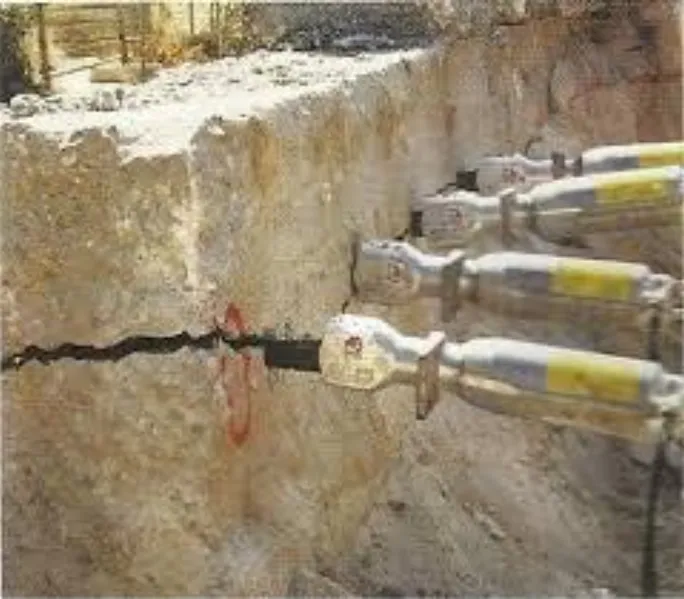
The process typically begins by drilling appropriately positioned holes into the rock. A hydraulic splitting device is then inserted into the hole.
Hydraulic pressure creates concentrated force within the rock, encouraging it to split along a controlled fracture path.
The resulting pieces can then be removed or reduced further as required.
Unlike explosive methods, hydraulic splitting does not rely on detonation to fracture the rock.
Situations Where It Can Be Useful
Hydraulic splitting may be considered for:
- Foundation excavation
- Hard rock encountered during civil work
- Basement excavation
- Road projects
- Industrial construction
- Trenching
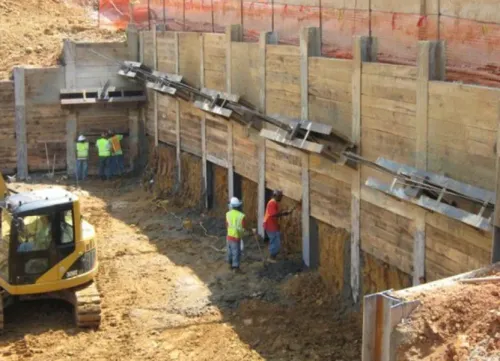
- Rock removal near existing buildings
- Restricted construction sites
Its suitability depends on rock characteristics, required excavation quantity, access, drilling conditions, and project schedule.
Why Contractors Consider Controlled Splitting
Blasting can be highly productive in suitable conditions, but not every site is appropriate for explosive excavation.
Projects close to buildings, industrial equipment, underground services, roads, or active operations may require a different approach.
Hydraulic splitting can offer more localised rock breakage, allowing teams to work progressively through the required area.
Rock Conditions Still Matter
Rock is not uniform. Hardness, natural joints, fractures, bedding, weathering, and geological composition influence how effectively it can be split.
Hole positioning is therefore important. Simply drilling randomly into a rock mass does not guarantee efficient fragmentation.
Experienced site assessment can help determine drilling patterns and splitting sequences based on visible rock conditions.
Planning the Excavation Sequence
Controlled rock removal should be integrated with excavation planning.
Before work begins, teams should consider:
- Required excavation dimensions
- Depth of rock formation
- Equipment access
- Nearby structures
- Underground utilities
- Drilling requirements
- Rock removal arrangements
- Working space for machinery
Creating manageable fragments is only part of the job. Those fragments must still be lifted, loaded, transported, or reused.
Comparing Productivity Properly
A method should not be evaluated only by how quickly it breaks one section of rock.
Total productivity includes drilling, splitting, fragment removal, machine movement, access limitations, and any restrictions affecting working hours.
In certain environments, a more controlled technique may support smoother overall project execution even if another method provides faster raw breakage under unrestricted conditions.
Salasar Demolitions Pvt Ltd undertakes specialised demolition and controlled material-removal work for construction requirements. For Chandrapur sites, assessing the rock formation and surrounding environment before equipment mobilisation can help determine whether hydraulic splitting is appropriate.
Hydraulic Rock Splitting is best understood as a specialised excavation option rather than a universal replacement for other rock-breaking methods. Its strongest applications are projects where controlled fragmentation and site constraints play a significant role in method selection.
Keywords