The first decision is not which machine to hire; it is whether the building needs complete removal, controlled alteration, or strengthening that preserves the existing structure. By the end, you will have a practical checklist for defining the work, verifying structural and legal constraints, selecting a method, and controlling utilities, debris, dust, vibration and temporary stability.
Key takeaways
- Retain sound structure when demolition would disrupt safe load paths.
- Survey the building, adjoining properties, utilities and hazardous materials first.
- Obtain approvals and written confirmation that every service is isolated.
- Sequence demolition to control collapse, dust, debris and neighbour risk.
Decide What Must Be Removed—and What Should Remain
Choose total demolition only when the survey shows that retaining the structure is unsafe, uneconomic, or incompatible with the new project. Compare the options against structural condition, retained load paths, neighbour protection, hazardous materials, utility isolation, and the value of salvageable components.
| Option | What it means | When it applies |
|---|---|---|
| Total demolition | Remove the building and foundations under a planned sequence | Widespread instability, severe fire or deterioration, or no practical retained structure |
| Partial demolition | Remove defined floors, wings, walls, slabs, or façades | The remaining building has a usable structural system and a designed interface |
| Selective dismantling | Remove components in a controlled order for reuse or minimal disturbance | Salvage, heritage elements, tight sites, or occupied surroundings |
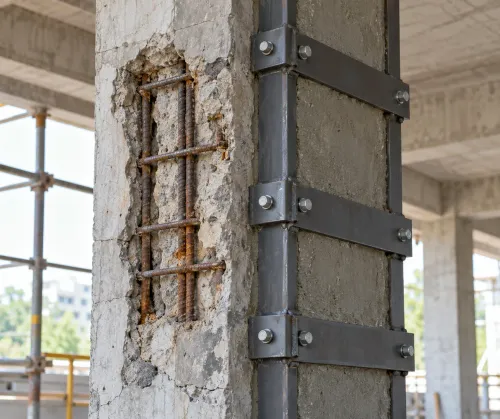
| Structural strengthening | Repair and upgrade existing members instead of removing them | Damage is localised and the load path can be verified and restored |
Do not make the choice from appearance alone. An engineer’s pre-demolition survey must trace columns, beams, slabs, foundations, additions, alterations, fire damage, deterioration, basements, retaining walls, and adjoining structures. If intrusive work reveals undocumented construction, update the survey and sequence.
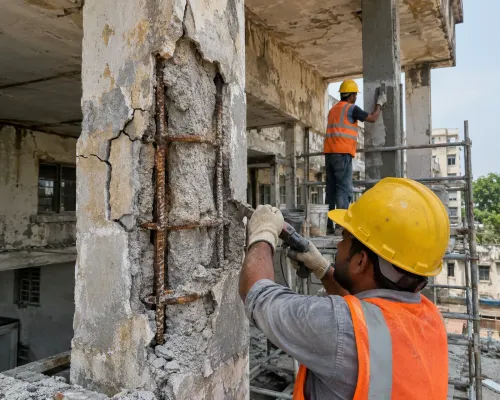
Partial demolition also creates a new temporary structure. Check whether suspended floors can carry debris, skips, crushers, or wheeled plant; set drop zones, removal rates, propping, and direct-to-ground routes before work starts. Design weatherproofing with the permanent repair interface: protect exposed reinforcement, and prepare cut edges and concrete surfaces for the specified repair system.
Survey the Structure Before You Disturb It
Before anyone cuts, breaks, drills or removes a structural element, the pre-demolition survey must establish how the building stands, what has changed, and what could move when work begins. A competent person should verify the findings against the site, not rely on incomplete structural drawings.
1. Trace the load paths from roofs and floors through beams, slabs, columns, walls, foundations, basements and retaining walls. Mark elements that provide bracing or support to neighbouring structures.
2. Record previous alterations and additions, including infill walls, removed columns, enlarged openings, added floors, façade changes and unrecorded repairs. Intrusive investigation must update the survey when it exposes undocumented construction.
3. Identify deterioration and unstable conditions: fire damage, corrosion, cracking, settlement, water damage, loose cladding, delaminated concrete and damaged connections. Photograph and mark each hazard on a plan.
4. Locate prestressed or post-tensioned members, tendon routes, stressing direction and anchorage zones before drilling, chasing, coring or cutting. Specify temporary support and controlled release; severing a tendon can trigger sudden failure.
5. Check adjoining buildings, shared walls, party walls, basements, retaining structures and foundations for movement risk. Set monitoring points where demolition could transfer load or vibration.
6. Assess asbestos, lead coatings, respirable silica and other hazardous substances through appropriate testing; visual inspection cannot rule them out. Map electric, gas, water, steam and sewer services, then verify isolation physically rather than trusting old drawings.
The survey must also state where debris, skips and plant may stand. Suspended floors are not automatically demolition platforms: calculate temporary loads, define drop zones and set removal limits before accumulation begins.
Clear Approvals, Services and Hazardous Materials
Before mobilisation, prove that you may demolish the building, that every service is isolated, and that hazardous materials have been identified. Keep the title deed or registered lease, latest property card or 7/12 extract where applicable, owner’s written authority, and sanctioned building drawings with the project file.
| Check | Evidence to obtain | Failure if missing |
|---|---|---|
| Ownership | Title or lease documents and owner authorisation | Work can be challenged as unauthorised |
| Permission | Nagpur demolition permission and Maharashtra municipal approvals | Stop-work action or penalties |
| Access and traffic | Road-occupation or traffic permission where hoardings, skips, cranes or trucks affect public space | Unsafe access and enforcement action |
| Utilities | Written shutdown records, capped connections and physical verification of electricity, gas, water, steam, sewer and telecom lines | Electrocution, flooding, fire or gas release |
| Hazardous materials | Survey report covering asbestos and lead paint, silica-containing concrete, contaminated soil, treated timber and gypsum | Exposure, cross-contamination and improper disposal |
Do not rely on old drawings for utility disconnections. Trace and expose services where needed, including buried lines outside the footprint that access roads, crane outriggers or temporary works could damage.
Use a competent hazardous-materials assessor before cutting, breaking or stripping finishes; visual inspection cannot rule out asbestos, lead coatings or respirable crystalline silica. Agree in writing who classifies waste, arranges licensed disposal and retains consignment records. Segregate concrete, steel, gypsum and contaminated materials at source.
Choose the Demolition Method Around the Structure and Site
Choose the method that preserves load paths, protects neighbours and gives you a workable debris route—not the machine with the highest output. Treat each removal stage as temporary works: check propping, bracing, exclusion zones, lifting points and the load capacity of every floor receiving debris.
| Option | Best fit | Main limitation or control |
|---|---|---|
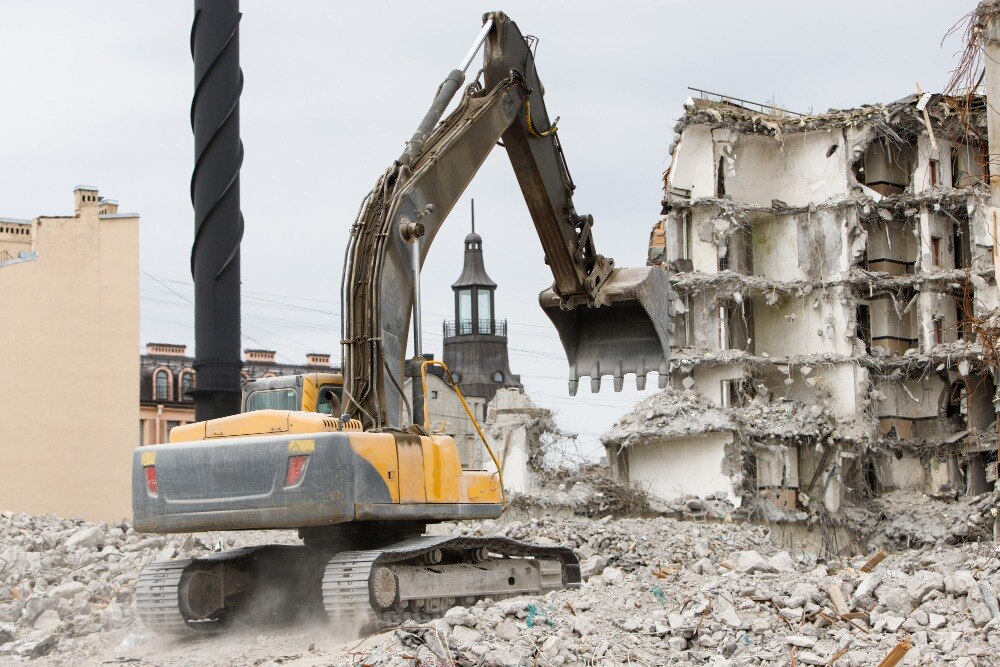
| Excavator demolition | Open sites and mass removal after stability is secured | Reach, vibration and machine loads can damage retained structures |
| Hand demolition | Tight interiors, fragile interfaces and selective removal | Slow; control falling debris and worker exposure |
| Pneumatic breakers | Local concrete or masonry breaking where access is restricted | Vibration, noise, silica dust and loosened reinforcement |
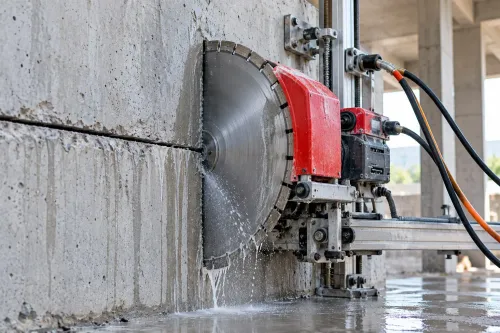
| Diamond sawing | Clean cuts through slabs, beams, walls and columns | Water, slurry and heavy cut sections require lifting space |
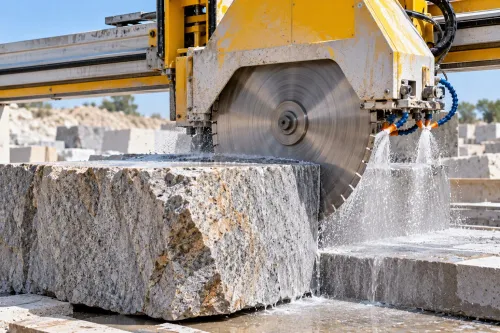
| Wire sawing | Deep sections, thick walls, foundations and irregular cuts | Plan the cut path, water management and verified lifting points |
| Wall saws | Straight cuts in accessible vertical or horizontal surfaces | Track anchorage and operating clearance must be secure |
| Robotic demolition | Remote breaking in hazardous, confined or high-dust areas | Confirm access, floor capacity, remote visibility and debris handling |
| Dismantling | Façades, steelwork, services and reusable components | Requires a strict top-down sequence and controlled lifts |
| Controlled explosives | Isolated sites where rapid collapse is engineered and permitted | Blast design, exclusion distances, vibration and approvals are extensive |
Diamond sawing and wire sawing reduce impact vibration compared with breakers, but they do not remove risk: scan results must be checked against drawings and post-tensioning records, and silica controls must match the tool. Use wet cutting, shrouds or HEPA extraction; never dry-sweep dust.
Ask Salasar Demolitions Pvt Ltd to price the selected method against a written sequence, including temporary works, debris removal rates and protection of retained concrete—not against equipment alone.
Related products
 | DEMOLITION / BREAKING OF PILE. Qui Cutter is a material that allows convenient pile head breaking by generating cracks in the concrete piles to break them down with low pollution... View product → |
 | Concrete breaker CONCRETE BREAKING USING ELECTRICAL & PNEUMATIC TRACTOR BREAKERS ₹5900 These hand held pneumatic paving breakers are ideal for asphalt cutting, demolition of reinforced concrete and breaking of rock outcrops and paving. View product → |
Write the Sequence and Plan the Risks That Follow
The demolition method statement must turn the design into a controlled sequence, with named hold points and stop-work triggers. Treat each removal as temporary works: show how load will transfer, where temporary propping or bracing goes, and how the plan prevents progressive collapse.
1. Set the sequence from stable areas towards unstable ones, identifying slab, wall, façade and bracing removals. State how prestressed or post-tensioned members will be located, supported and cut without releasing stored energy.
2. Define debris drop zones, removal rates and maximum stockpile weights. Do not rely on suspended floors to carry skips, crushers or moving rubble; transfer heavy loads directly to ground or verify each temporary load path.
3. Mark exclusion zones around the workface, lifting paths and falling-object areas. Control access with barriers and a banksman, and show emergency escape routes, rescue arrangements and service-isolation points. Verify electric, gas, water, sewer and other lines physically, not from old drawings.
4. Specify silica dust control, including wet cutting or local extraction, respirators, housekeeping and air monitoring where exposure warrants it. For slurry, show collection, pumping, settlement or filtration, lawful disposal, and protection of drains, waterproofing and electrical equipment.
5. Name monitoring points for movement, vibration, cracking, dust and noise. Set readings that require a pause, engineer review or evacuation before work resumes.
6. Separate concrete, reinforcing steel, gypsum, timber and contaminated waste at source, with assigned documentation and disposal routes. Install temporary roofs, tarpaulins or sealed openings before rain can saturate retained finishes, exposed reinforcement or electrical systems.
Frequently asked questions
How do you decide what to remove in a demolition project?
Compare total removal with partial demolition by checking structural condition, retained load paths, neighbour protection, hazardous materials, utility isolation and salvage value.
What should a structural survey cover before demolition?
Inspect the building’s framing, slabs, walls, foundations, adjoining structures, previous alterations, access constraints and potential collapse paths before disturbing it.
Which approvals and checks are needed before demolition starts?
Clear the required demolition permissions, confirm utility isolation in writing, and identify asbestos, lead paint, chemicals, contaminated soil and other hazardous materials.
How should you choose a demolition method?
Match the method to the structure, retained elements, site access, surrounding buildings, noise and vibration limits, dust control needs and debris-handling arrangements.
Related products
 | Diamond Sawing BEAM CUTTING BY Diamond SAWING Cutting of R C C floors Roads Walls Beams & Column Without any vibrations & shocks to the surrounding structures to carry out any Post Construction... View product → |
 | Wall Sawing, Concrete Sawing, PQC Road Cutting ₹10000 We offer complete, carefully thought-out, easy-to-use wall sawing systems. View product → |
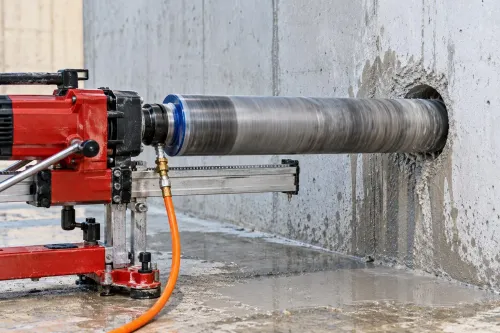
 | Core Cutting, Long Coring, Core Prepration For Testing Association of concrete cutting professionals that work together to advance the concrete cutting industry with a strong emphasis on personal safety. View product → |
 | Eco-Friendly Rock and Concrete Breaking. Rock Surgeons specialize in safe rock breakup of bedrock, boulders and concrete. View product → |