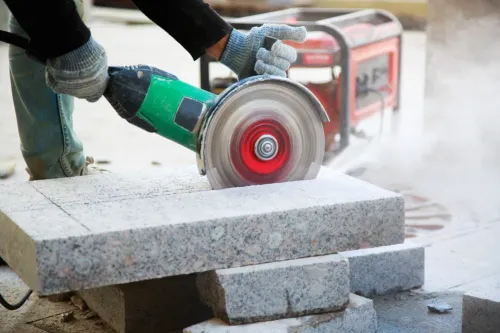
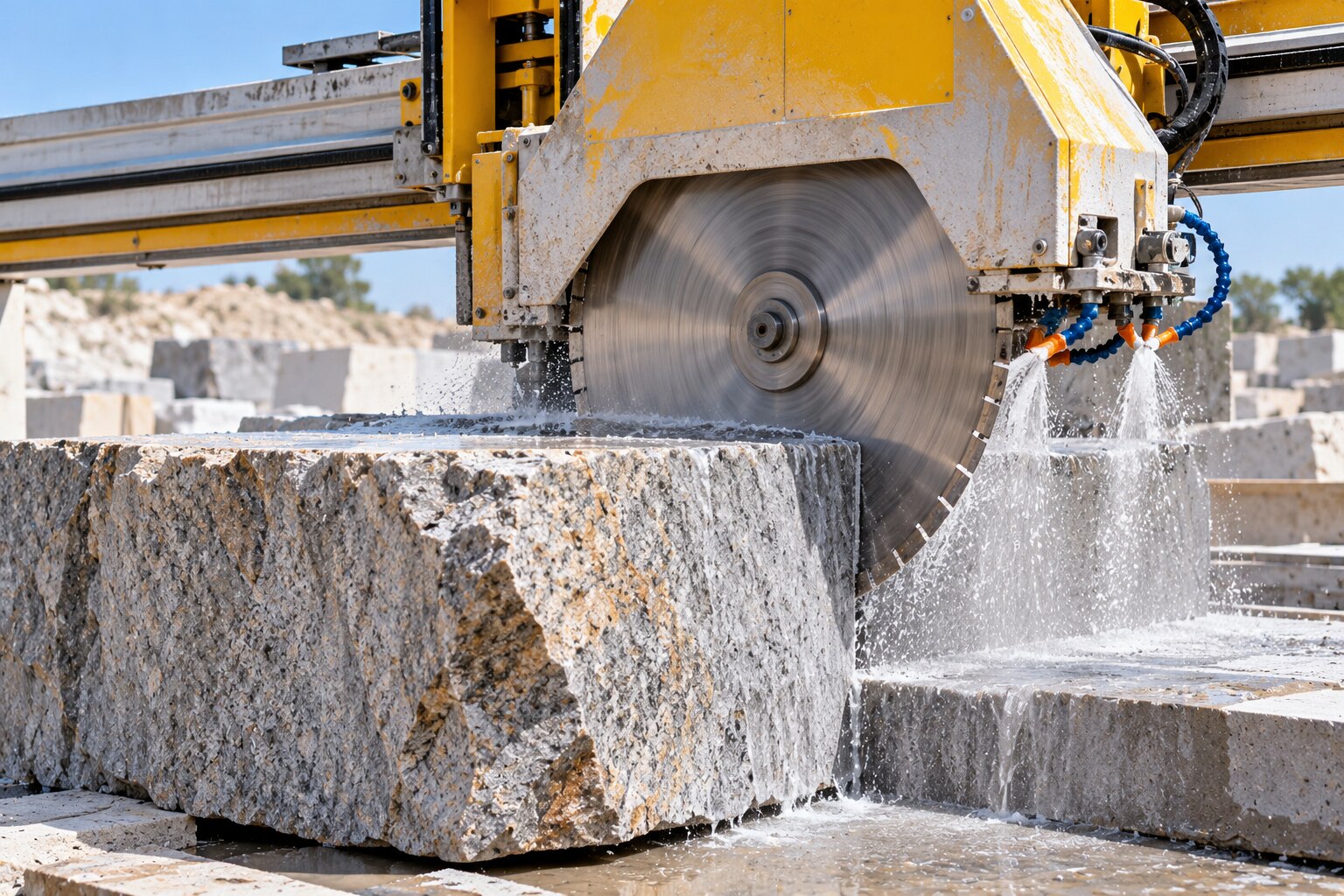
Choose sawing when the excavation boundary matters more than the lowest possible removal cost, especially beside foundations, retaining walls, tunnel linings or live services. By the end, you will be able to test the rock, access, equipment, removal plan and acceptance criteria before deciding whether sawing is suitable or whether another excavation method is the better fit.
Key takeaways
- Define the excavation line and protect retained structures before selecting equipment.
- Use saw cutting when overbreak, vibration, dust or damage carries a high cost.
- Confirm rock hardness, cut depth, access, water supply and spoil removal.
- Specify tolerances for line, depth, overbreak, vibration, dust and cleanup.
Start with the excavation boundary, not the cutting machine
Define the excavation boundary before choosing the machine. Saw rock cutting is justified for a controlled rock excavation when the line must be predictable and the cost of overbreak, vibration, dust or damage to retained rock is high. Examples include trimming beside a foundation, retaining wall, tunnel lining or buried service.
Set the required depth, level, cut sequence, block size, support and overbreak tolerance first; a kerf alone does not remove the rock mass.
| Method | Boundary control | Best fit |
|---|---|---|
| Saw cutting | Narrow, inspectable kerf with low vibration | Limited-volume cuts where overbreak is costly |
| Hydraulic splitting | Releases blocks behind a perimeter cut with little vibration | Rock that has drilled access for splitting |
| Breaker | Removes rock quickly but carries impact and wider damage risk | Open access with moderate overbreak tolerance |
| Blasting or ripping | High production with lower precision and larger exclusion zones | Large open cuts without sensitive retained structures |
Approve sawing only if:
- The line is surveyed and nearby services are scanned.
- Access exists for threading or mounting, reaction forces, cooling water, slurry collection and block removal.
- A release plan names splitting, wedging, lifting, small breaking or secondary wire cutting.
- The specification sets line, level, depth, sequence, block size and support checks.
A geometrically accessible line is not automatically sawable. If the rock cannot be released and removed after cutting, the method controls the boundary but not the excavation.
Match the saw to the rock, geometry and access
Massive competent rock gives the clearest saw line because the cut face stays intact while the kerf advances. Fractured rock, weathered rock, clay seams and open joints can ravell behind the blade, so treat the saw line as a weakening line rather than a guaranteed free face.
Quartz-rich, abrasive rock can also wear diamonds quickly despite moderate strength.
| Option | Best fit | Equipment arrangement |
|---|---|---|
| Track-mounted wall saw | Straight, accessible, relatively shallow cuts | Firm track support, blade clearance, reaction space and water collection |
| Diamond wire saws | Deep cuts, large blocks and irregular geometry | Threading route, anchor points, pulley clearance, tensioning space and lifting access |
| Rock chainsaw or slot saw | Narrow, elongated slots | Machine reach, chain specification, spoil route and continuous access along the slot |
Do not approve a method from rock strength alone. Check grain size, cementation, quartz content, abrasivity, water condition, discontinuities and any steel or embedded obstruction before selecting the tooling.
A line is not practically sawable because it fits on a drawing. The setup must allow the machine to reach the cut, the wire to be threaded, corners to clear, cooling water to arrive, slurry to be collected, and released blocks to be lifted or removed.
Scan for services, survey the rock, mark the line, establish anchors and exclusion zones, then confirm a spoil route. If access prevents threading, tensioning or block removal, choose another excavation method or redesign the sequence.
Understand what the cut achieves—and what still has to be removed
A saw creates a controlled kerf, not an excavated void: you still need to release, lift, split, break and haul the isolated rock blocks. The sequence is survey and scan, mark line and level, establish access and anchor points, cut the perimeter or slots, then remove blocks without damaging retained rock.
Joints and bedding decide whether a block releases safely; map faces or probe where a wedge could threaten a support or structure.
| Option | Main action | Best use | What remains |
|---|---|---|---|
| Saw cutting | Opens a physical kerf with a wall saw or wire saw | Precise boundaries, low-vibration work | Blocks still require lifting, splitting, breaking or removal |
| Hydraulic rock splitting | Expands drilled holes to separate rock | Controlled release beside sensitive structures | Drilling, access and block handling |
| Drilling | Creates holes for splitting or explosives | Preparing a planned separation | Drilling alone does not excavate the mass |
| Controlled blasting | Fractures rock with designed charges | Rapid bulk excavation where vibration and flyrock are acceptable | Muck removal and face scaling |
| Excavator breaker | Impacts and fragments exposed rock | Flexible secondary breaking and irregular removal | Higher noise, dust and transmitted vibration |
| Rock ripping | Tears suitable weathered or jointed rock with a ripper | Fast shallow excavation in weak, fractured material | Poor precision in hard, massive rock |
Choose sawing when boundary precision and low transmitted vibration outweigh production speed. It produces less dust, flyrock and vibration than impact breaking or blasting, but the frame, wire, released blocks and secondary work still transmit force. A saw kerf is not presplitting or smooth blasting; those rely on drilled-hole geometry and explosive loading.
For large open cuts, ripping, blasting or an excavator breaker usually removes volume faster. Specify overbreak, underbreak, line, level, block size, support and the removal route.
Check water, spoil handling and production before approving the method
A cut is not economical if the machine can reach the rock but the site cannot handle water, blocks or spoil. Confirm working clearance for wire threading, blade travel, corner clearance, reaction forces, lifting and the removal route before approving the method. A narrow excavation can turn a fast cut into expensive handling.
- Map groundwater and plan water management. Identify discharge points, sumps, pumps, temporary containment and filtration before cutting. Uncontrolled groundwater can carry cutting slurry and fines into joints, drains or nearby structures; budget sealing or permanent waterproofing where the kerf becomes a preferential flow path.
- Price production from the actual rock, not compressive strength alone. Quartz-rich or highly abrasive rock increases diamond wear, while cementation, grain size, weathering, water condition and discontinuities alter cutting speed. Ask for a tooling allowance and a realistic metres-per-shift estimate.
- Define how each block will leave the excavation. Include block dimensions, lifting capacity, splitting or secondary cutting, access for a breaker, loading space and spoil removal. A saw creates a kerf; it does not excavate the released mass.
- Compare the resulting cost and risk with splitting, breaking or controlled blasting. Sawing earns its place where vibration, dust, overbreak or exclusion zones have a high cost, not where rapid bulk removal matters most.
Salasar Demolitions Pvt Ltd can help test this sequence against access, water and removal constraints before you commit to a cutting rate that the site cannot achieve.
Related product
 | rockcutting by diamond wire sawing machine View product → |
Write acceptance criteria that make “controlled” measurable
The specification should set numerical limits for the finished excavation, not merely name diamond sawing. State allowable overbreak and underbreak, line and level tolerances, cut deviation in millimetres, required cut sequence, block dimensions, lifting limits and temporary or permanent support requirements.
- Record the surveyed design line, level and coordinates before cutting, then set the maximum cut deviation and post-cut survey tolerance.
- Define the allowable vibration at each sensitive structure in mm/s peak particle velocity, with seismographs at agreed monitoring points and a stop-work trigger above the limit.
- Identify reinforcement, tendons, embedded services, voids and uncertain ground before drilling or threading; require approval for any changed blade, wire route or sequence.
- Require the contractor to submit block dimensions, estimated weight, release method, lifting points and the removal route before isolating each block.
- Specify cooling-water volume, slurry containment and housekeeping limits so contaminated runoff cannot enter drains, soil or operating areas.
- Require face mapping after each release, including joints, wedges, loose rock and damage beyond the excavation boundary; install support before removing the next block where the method statement requires it.
- Check the completed excavation against line, level, overbreak, underbreak, cut deviation and surface finish requirements, with photographs and survey records.
Reject work that leaves an unstable wedge, unapproved exposed steel, an obstructed removal route or a surface outside the specified finish. Record vibration, stoppages, block weights, deviations and remedial work in the completion dossier.
Frequently asked questions
When is saw rock cutting suitable for controlled excavation?
Use it when you need a predictable excavation boundary beside a foundation, retaining wall, tunnel lining or buried service, and uncontrolled overbreak, vibration, dust or retained-rock damage would be costly.
How do you choose a saw for rock cutting?
Match the saw to rock hardness, required cut depth, excavation geometry and site access. Check whether the equipment can reach the full line and operate without damaging adjacent structures.
Does saw cutting remove all the excavated rock?
No. Sawing creates a defined kerf or boundary; you still need a planned method for breaking, lifting, loading and disposing of the remaining rock.
What should acceptance criteria cover for controlled rock excavation?
Specify the permitted line and depth deviation, maximum overbreak, vibration limits, dust and water controls, exposed-surface condition, spoil removal and final cleanup.