Removing thick or heavily reinforced concrete often creates a practical question: should the structure be broken using impact equipment, or should it be separated using Diamond Wire Saw Cutting?
For complex projects in Buldhana, Maharashtra, the right choice depends on concrete dimensions, accessibility, structural surroundings, permissible vibration, required finish, and the size of the section being removed.
Where Conventional Breaking Performs Well
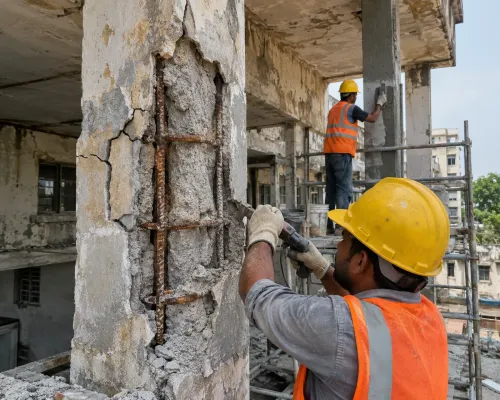
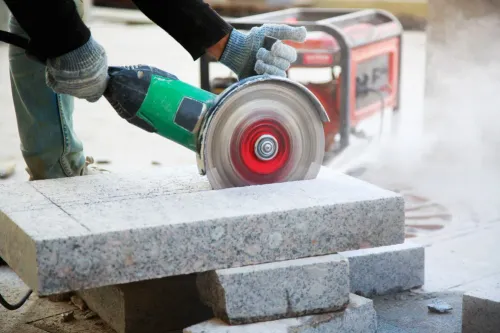
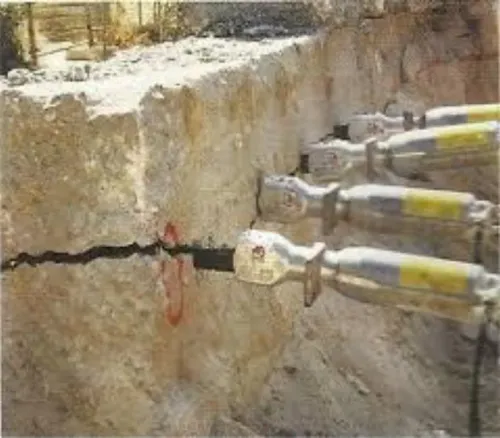
Hydraulic and pneumatic breakers remain widely used because they can efficiently reduce concrete into smaller pieces.
Breaking may be practical when:
- Large areas require general demolition
- Edge precision is not critical
- Surrounding structures can tolerate the activity
- Concrete needs to be reduced for disposal
- The site provides sufficient working space
For straightforward demolition, this can remain an effective approach.
Where Wire Saw Cutting Changes the Approach
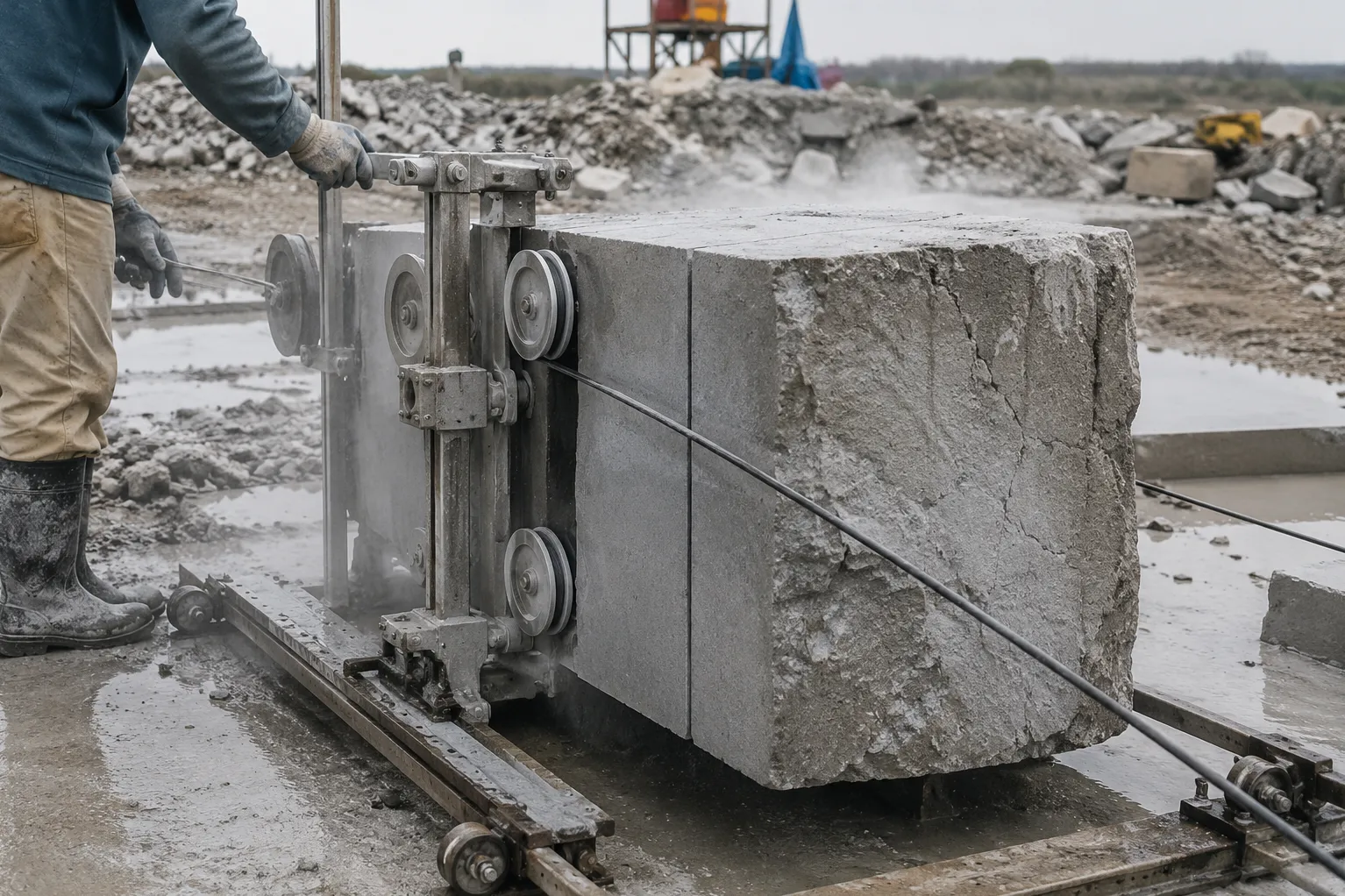
Diamond wire sawing uses a diamond-segmented wire that travels around or through a concrete section. This allows substantial structural elements to be separated along planned cutting paths.
The technique can be considered for:
- Thick RCC members
- Large foundations
- Heavy concrete blocks
- Bridge components
- Columns
- Beams
- Restricted structural sections
- Industrial concrete structures
Its flexibility can be particularly useful where conventional circular saw blades cannot practically reach the full cutting depth.
Vibration Considerations
Impact breaking works through repeated force. Wire sawing relies primarily on an abrasive cutting action.
Where vibration needs to be limited because of nearby machinery, retained structural elements, sensitive installations, or occupied premises, this distinction may influence method selection.
That does not automatically make wire sawing the correct choice. Site conditions still determine suitability.
Precision Requirements
Breaking usually produces irregular fracture lines. Wire sawing can create a more defined separation plane.
If an entire concrete mass will be demolished, irregular edges may not matter. If one section must be removed while another remains, controlled cutting becomes more valuable.
This is why the intended condition of the remaining structure should be considered before selecting the method.
Access Can Decide the Method
Wire saw equipment requires a suitable setup and a workable wire path. Contractors must consider how the wire will be positioned, how equipment will be anchored, and how the separated concrete section will subsequently be handled.
Conventional breakers also require access, but their requirements differ.
The best decision therefore comes from inspecting the actual site rather than selecting equipment based solely on concrete thickness.
Cost Should Be Viewed in Context
Comparing only hourly equipment rates can be misleading. A method that initially appears less expensive could create additional breaking, finishing, debris handling, or repair work.
Project teams should consider total execution requirements, including cutting time, handling, lifting, disposal, surface condition, and impact on nearby operations.
Salasar Demolitions Pvt Ltd handles specialised concrete cutting requirements where method selection depends on structural and operational conditions. For Buldhana projects, drawings, photographs, dimensions, access details, and removal objectives can help determine whether wire sawing or conventional breaking better suits the work.
The correct method is ultimately the one that achieves the required removal safely, predictably, and with appropriate control over the retained structure.
Keywords