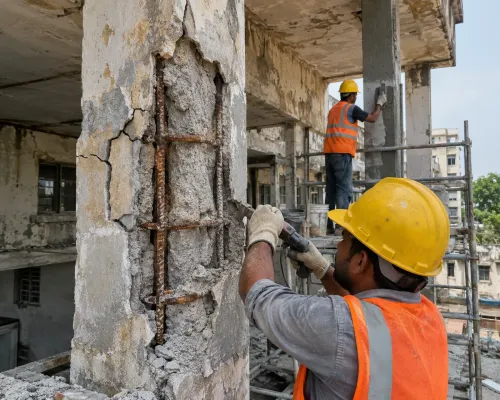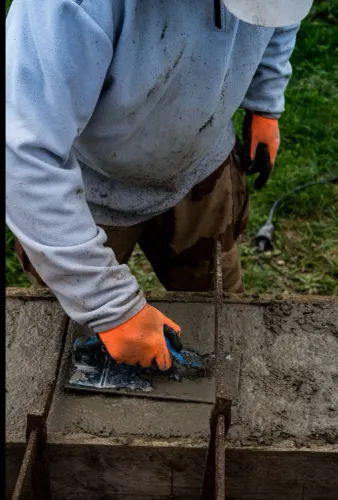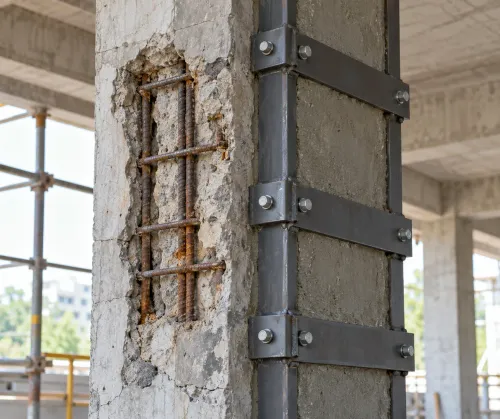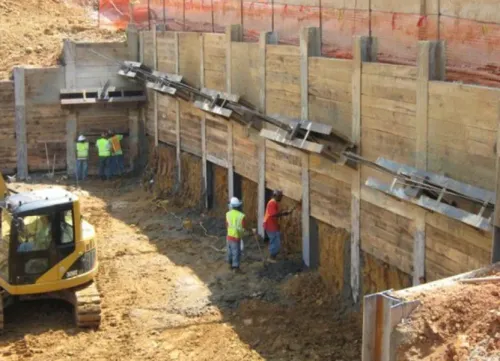
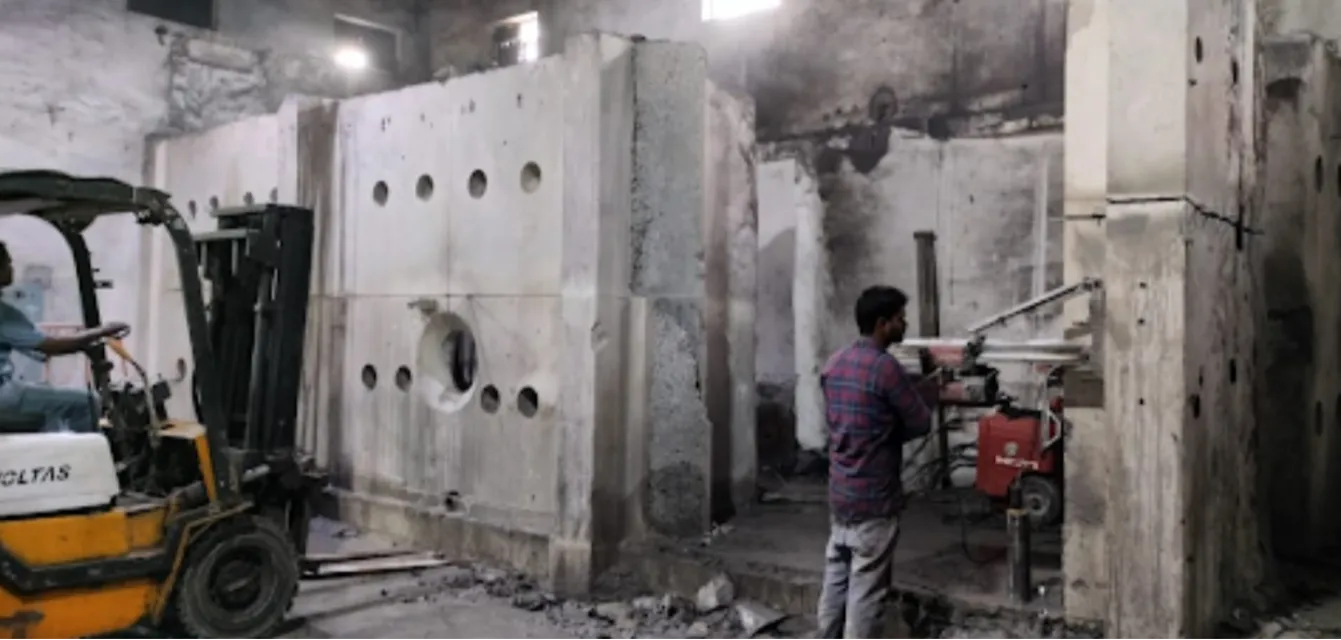
Creating a precise opening through thick reinforced concrete can become challenging when conventional drilling equipment cannot achieve the required depth. Long Core Cutting addresses this requirement by creating controlled circular openings through substantial RCC sections without unnecessarily breaking the surrounding concrete.
The technique has applications across industrial, commercial, infrastructure, and building modification projects in Akola, Maharashtra, particularly where existing concrete structures need new service passages or engineering alterations.
What Long Core Cutting Means
Core cutting uses a diamond-tipped cylindrical drilling system to remove a circular section of concrete. Long core cutting extends the same principle to deeper or thicker structural sections.
Depending on project conditions, it can be useful for penetrating:
- Thick RCC walls
- Deep foundations
- Large concrete blocks
- Retaining structures
- Heavy slabs
- Industrial machine foundations
- Structural concrete sections
The resulting opening can accommodate utilities, pipes, ducts, cables, anchor systems, or engineering inspection requirements.
Where Conventional Breaking Becomes Difficult
Suppose an industrial facility requires a new utility pipe through a thick RCC section. Breaking the surrounding area with impact equipment could remove considerably more concrete than necessary.
It may also create vibration and leave irregular edges requiring additional repair.
Long core cutting concentrates the work within a defined diameter. This makes it useful when an engineer requires a specific opening rather than broad concrete removal.
Accuracy Depends on Preparation
The drilling location should be determined carefully before work starts. Existing reinforcement, concealed services, required drilling angle, core diameter, and depth can all influence execution.
Site teams should verify:
- The exact opening position
- Required diameter and depth
- Accessibility from the drilling side
- Water management requirements
- Nearby electrical or plumbing services
- Structural instructions provided by the project engineer
These checks become increasingly important as drilling depth increases.
Typical Project Applications
In commercial buildings, long cores may be required for plumbing, electrical, HVAC, or fire-service installations.
Industrial plants may need openings through heavy foundations for pipelines, equipment modifications, drainage, or process utilities.
Infrastructure projects can require deep drilling through substantial RCC sections during alterations, testing, retrofitting, or service installation.
The technique can also support renovation work where newly planned services must pass through existing structural elements.
Why Diamond Technology Helps
Diamond cutting systems are designed to cut concrete with controlled material removal. Compared with aggressive impact breaking, core drilling can create a more defined opening with less disturbance to the surrounding area.
However, cutting into structural concrete should never be treated simply as a drilling task. Reinforcement and load-bearing considerations need to be understood where relevant.
Salasar Demolitions Pvt Ltd undertakes specialised concrete cutting work for projects requiring controlled structural modifications. In Akola, contractors planning deep RCC penetrations should provide accurate drawings, dimensions, site conditions, and access information before execution begins.
Long core cutting is most useful when depth and precision are equally important. Proper planning allows the required passage to be created while limiting unnecessary removal of the surrounding RCC, helping subsequent installation work proceed more efficiently.
Keywords